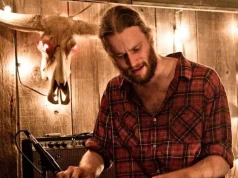
The recording artists’ collecting society, ACTRA RACS, is pushing for changes to Canada’s Copyright Act through a new campaign aimed at forcing streaming services to pay performers fairly.
Their campaign Burst Their Bubble calls for amendments that would create clear rules for how artists are compensated when music is streamed online. They say Canada’s copyright framework hasn’t kept pace with the technological shift to streaming platforms.
“There is no framework for performers to get paid through on-demand streaming,” said Andrew Karis, executive director at ACTRA RACS.
The Copyright Act hasn’t been significantly updated since 1997.
The industry has shifted from physical formats like CDs, vinyl and radio, to platforms like Spotify, Apple and YouTube. Statista reported the global streaming economy made nearly $30 billion in revenue. An IFPI global music report from 2024 found that, in Canada, streaming generated over $500 million USD.
Under the current system, streaming revenue flows primarily through record labels and rights holders and isn’t trickling down to artists fairly, explained Andrew.
Even when a recording generates millions of streams and the featured artist is paid, session musicians and other non-featured performers may not receive compensation, he said.
Mark LeFrance, an artist from BC who performed backing vocals and drums on several heavy metal recordings in the 1980s, shared with Andrew that he has counted millions of streams but he hasn’t received a dime.
“There’s this whole group of unfeatured artists who aren’t getting anything,” he said.
Attempts to address these issues in copyright law have already been put on trial.
The Society of Composers, Authors and Music Publishers of Canada (SOCAN) argued that making works available online should yield two separate royalties: one when the work is added online, plus one when the work is downloaded or streamed afterwards.
The Copyright Board agreed. However, the Supreme Court dismissed this appeal based on the principle of technological neutrality, the premise that royalty regimes for online and physical work should result in an equivalent amount of financial liability.
Other countries have taken a different approach.
In Spain, artists negotiate fair payment directly with streaming services, said Andrew. That system ensures a portion of streaming revenues goes directly to performers through their collective management organization.
Several countries in the EU are exploring similar remuneration policies, Andrew explained. “To me it always comes back to what we want as a culture. Do we want our stories to be told? Can that continue if we keep cutting the ability for artists to make a living?”
As ACTRA RACS waits for a better moment to push for legislative change, they are collecting testimonials from musicians who have gone unpaid despite millions of streams.
“We want performers to know that this exists and that places around the world do pay like this,” Andrew said. “People are angry,


and we’re trying to become a capturing point for the anger and the frustration and do something about it.”